The Secrets Behind a Healthy Lawn
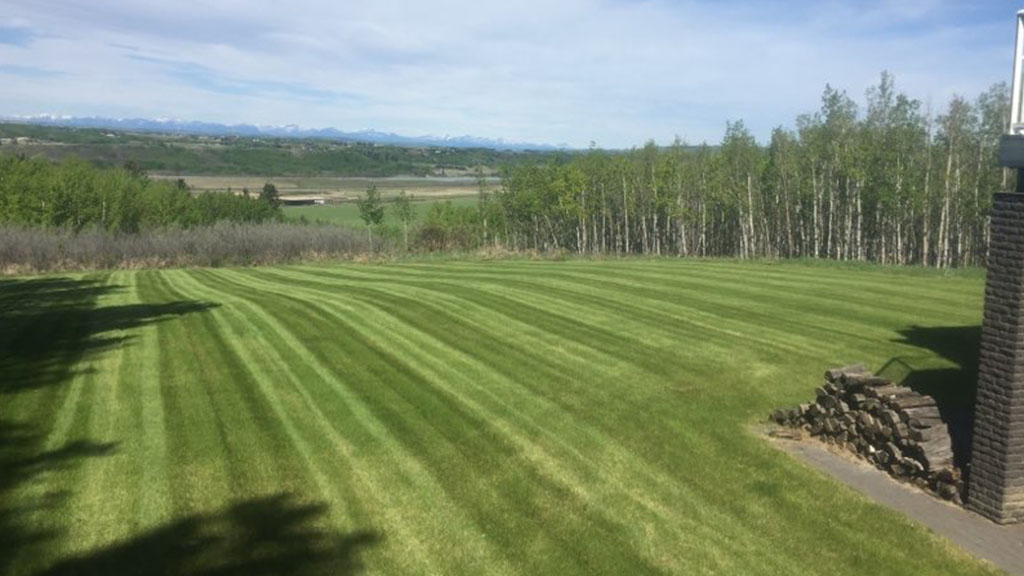
When people walk onto a commercial property with lush green turf, crisp edges, and healthy growth, they often wonder what the secret is.
Most people know a great lawn when they see one, but far fewer understand what actually goes into creating and maintaining it consistently.
A great commercial lawn does not happen by accident. Healthy lawns are usually the result of consistent fundamentals done properly over time.
At LECM, our maintenance teams ensure commercial properties maintain strong, resilient turf across Calgary’s demanding climate. Along the way, property managers, building operators, and site staff often ask us the same thing:
“What’s the trick to getting grass like this at my house?”
We see you. So, while this article is written for commercial landscape maintenance, there may or may not be a few strategies in here that work surprisingly well for residential lawns too.
What Makes Commercial Lawns Different?
Commercial lawns deal with challenges most residential properties never face:
- Heavy foot traffic
- Compacted soils
- Heat reflection from buildings and pavement
- Snow storage damage
- Irrigation inconsistencies
- Pet stress around public pathways
- Tight maintenance schedules
- Budget constraints
A healthy commercial lawn needs to look good, recover quickly, and remain durable through changing conditions.
That requires a maintenance strategy focused on long-term turf health, not just short-term appearance.
The Most Important Factor for Lawn Health
Surprisingly, it is usually not fertilizer, it’s soil health.
Healthy lawns start below the surface. Strong root systems allow turf to withstand drought, stress, disease pressure, and seasonal temperature swings more effectively.
That is why proper cultural practices matter so much.
How Often Should Commercial Lawns Be Watered?
One of the biggest mistakes people make is watering too frequently or too lightly. Frequent shallow watering encourages shallow roots. Shallow roots create weak grass.
Instead, lawns generally benefit from deeper, less frequent watering that encourages roots to grow downward in search of moisture. For most established lawns, a deep watering once or twice per week is more beneficial than daily surface watering. A properly configured, smart irrigation system can make this automatic.
A simple rule of thumb? Water deeply enough that moisture penetrates the root zone rather than just wetting the surface.
And yes, this applies at home too.
Mowing Height Matters
Absolutely.
Cutting grass too short is a quick way to weaken a lawn. Short-cut grass:
- Dries out faster
- Develops weaker roots
- Allows more weed pressure
- Experiences greater heat stress
LECM generally recommends maintaining turf at a healthier mowing height rather than scalping it for a short-term manicured appearance. Longer grass blades shade the soil, retain moisture better, and support stronger root development.
Another overlooked detail is sharp mower blades. Dull blades tear grass instead of cutting it cleanly, which increases stress and can leave lawns looking brown or frayed.
Why Aeration Is Important
Over time, commercial soils become compacted. Compacted soil restricts:
- Air movement
- Water penetration
- Root development
- Nutrient uptake
Aeration relieves that compaction by creating small openings in the soil profile, allowing oxygen, water, and nutrients to move deeper into the root zone.
For many commercial properties, annual aeration is a highest-value non-negotiable. It is also unglamorous, which is probably why homeowners often skip it. The lawns that look the best usually don’t.
Is Fertilizer Enough on Its Own?
Not really.
Fertilizer is important, but it works best when paired with healthy soil biology and proper cultural practices.
At LECM, we increasingly focus on sustainable lawn health strategies that support the soil ecosystem itself rather than simply pushing top growth with heavy chemical programs. That includes:
- Organic matter recycling
- Compost integration
- Sustainable fertilization practices
- Soil improvement strategies
- Liquid Compost Fertilizer (Compost Tea) applications
Healthy soil biology helps lawns naturally access nutrients more efficiently while improving stress tolerance and resilience.
Why Do Some Lawns Struggle Even With Irrigation?
Water alone cannot fix unhealthy soil. A lawn with poor soil structure or compaction may still struggle despite regular watering. Lawns benefit from fundamental routines that include:
- Aeration
- Overseeding
- Compost amendments
- Improved mowing practices
- Soil biology improvements
Overseeding
Overseeding involves introducing new grass seed into an existing lawn to improve density and fill thin areas. Thicker lawns naturally:
- Crowd out weeds
- Resist disease better
- Tolerate stress more effectively
- Recover faster from wear and tear
Commercial lawns experience constant stress throughout the season, which makes periodic overseeding an important part of long-term turf management.
Also, for anyone quietly taking notes for their own yard, this is one of the easiest ways to dramatically improve a tired-looking lawn over time. Overseed once a year for best results.
Sustainable Lawn Care
Sustainable lawn care is about improving long-term lawn health naturally and responsibly. LECM continues to invest in sustainable maintenance solutions that benefit both our clients and the environment, including:
- Liquid Compost Fertilizer (Compost Tea) applications
- Organic material recycling
- Soil health improvement
- Smart irrigation strategies
- Reduced chemical dependency where appropriate
The goal is not just greener grass today, it is healthier, more resilient landscapes long term.
Partner With LECM for Commercial Lawn Maintenance
At LECM, we help commercial properties maintain healthy, professional-looking landscapes through proactive maintenance strategies tailored to Calgary conditions.
From turf health programs and aeration to sustainable soil management and irrigation optimization, our team focuses on long-term property performance rather than short-term cosmetic fixes.
And if some of those strategies happen to improve your lawn at home too, we will keep that between us.