
Request an Estimate
Calgary, AB · 825-733-5326
We are committed to environmentally sustainable practices and have invested heavily in our recycling program. The soil, organics and gravel our crews take off your property come back to our facility to be screened, reused and recycled, so only true garbage ends up in a landfill.
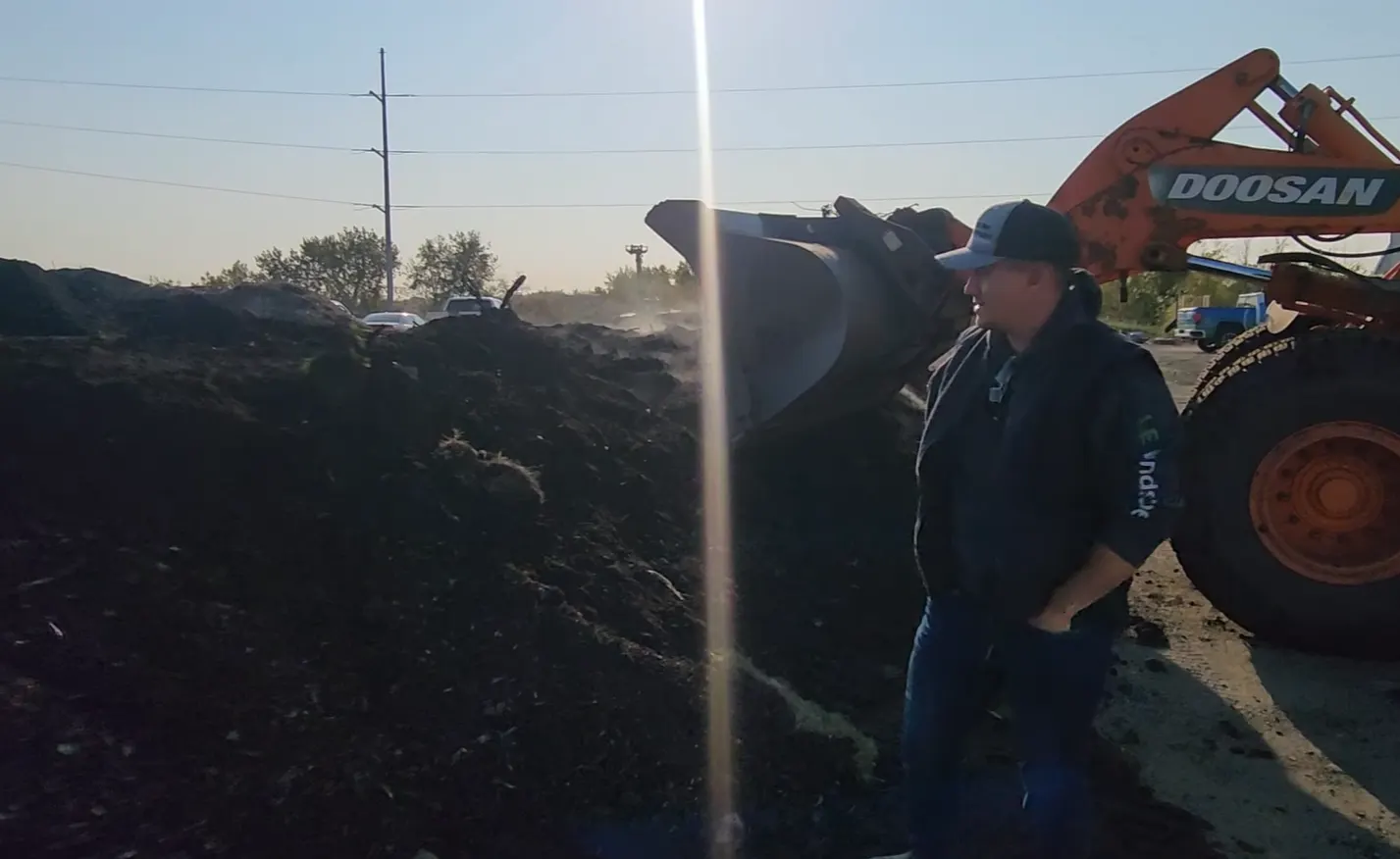
We care about the things that matter to you and your customers. As part of our regular operations, we support your sustainability goals by capturing and recycling materials.
LECM's recycling improves your bottom line in two ways:
Sustainability matters to us, and we have been listening: we know it matters to you too.
Working with us lets you do your part in capturing carbon and reducing your property's environmental footprint. It also keeps waste out of already scarce landfill space.
Many of LECM's customers are LEED certified and benefit from vendors that help them qualify for credits. Our sustainable practices qualify, and the credits can be claimed by our clients.
If you aren't LEED certified, working with us can help with the certification process, and at a minimum makes sure your facilities contribute to taking care of the planet we all share.
Material our crews remove from your property comes back to our recycling facility instead of going straight to a landfill.
When soil, clay, rocks and organic materials are excavated from landscaping projects, we screen them at our recycling facility to separate them so they can be processed and reused in other projects.
Grass, sod and leaves are collected by our landscape maintenance staff and brought back to be composted. Branches are collected by our arborists, chipped and added to the facility's compost piles.
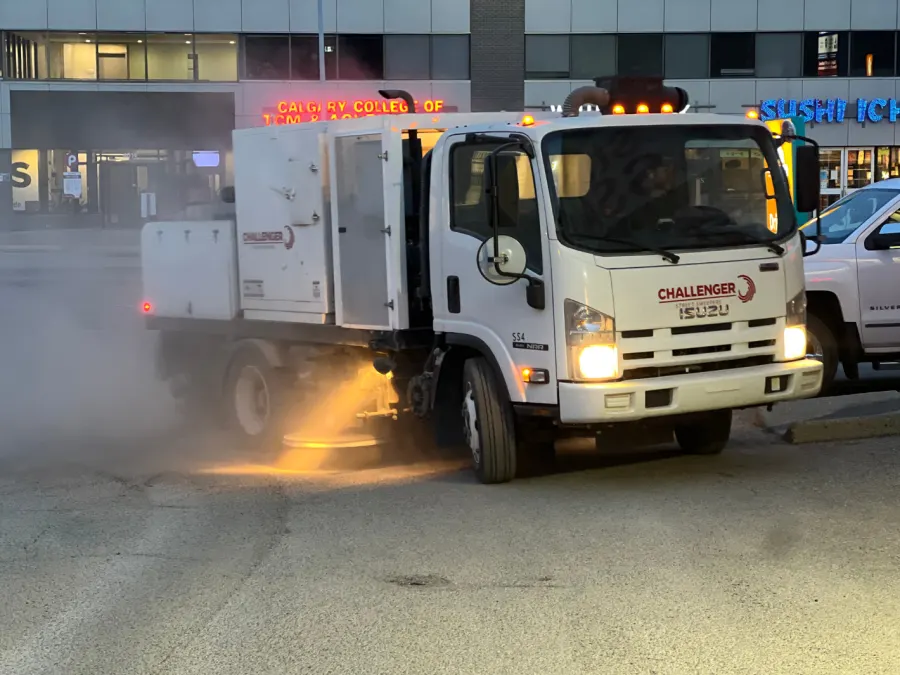
During spring cleanups, our snow and ice management staff sweep up the gravel applied over the winter and return it to our facility to be screened and reused next year.
Along with the other materials, some actual garbage (or diseased plant material) is collected, separated from the good material and disposed of.
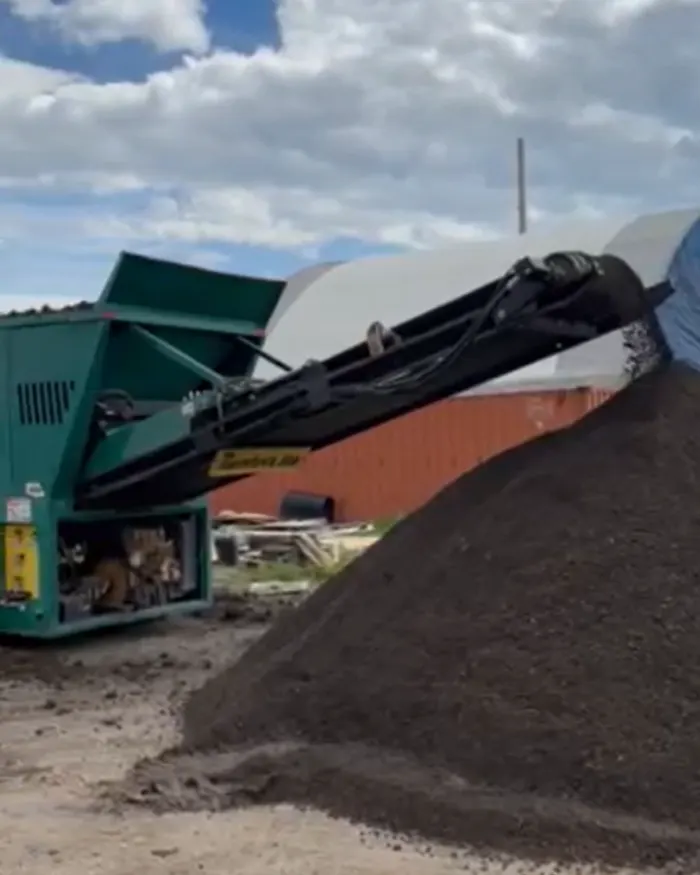
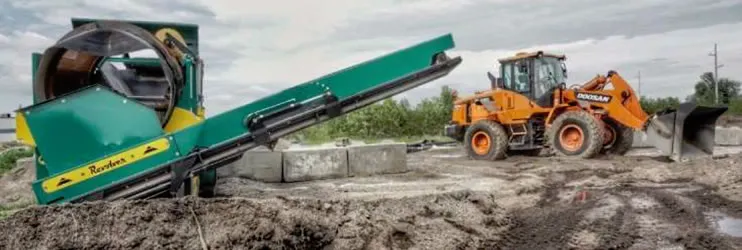
Once at our recycling facility, materials are loaded into a screener, a machine designed to separate them. After separation, we stockpile clays, loam and gravel for reuse.
We also capture organics, concrete, asphalt and screening fines (dust particles) that can be recycled into new purposes. The Recycle step below covers those.
Reusing materials keeps them out of the waste stream. When products are reused, the pollution generated in creating new materials is avoided and the energy originally invested in them is preserved.
Reusing clays, soils and gravel means we don't buy them new, which brings down your project cost.
35% of landfill waste comes from construction and demolition, according to the Canada Green Building Council.
Once screened, we harvest the loam for landscaping projects. Clays and rocks become base material for concrete and interlocking paving projects.
Gravel collected from snow maintenance sites is screened to remove fines and garbage, then stored for reuse the following winter.
To recycle something is to reprocess it so it can be used in a different application than before. It essentially becomes its own new raw material.
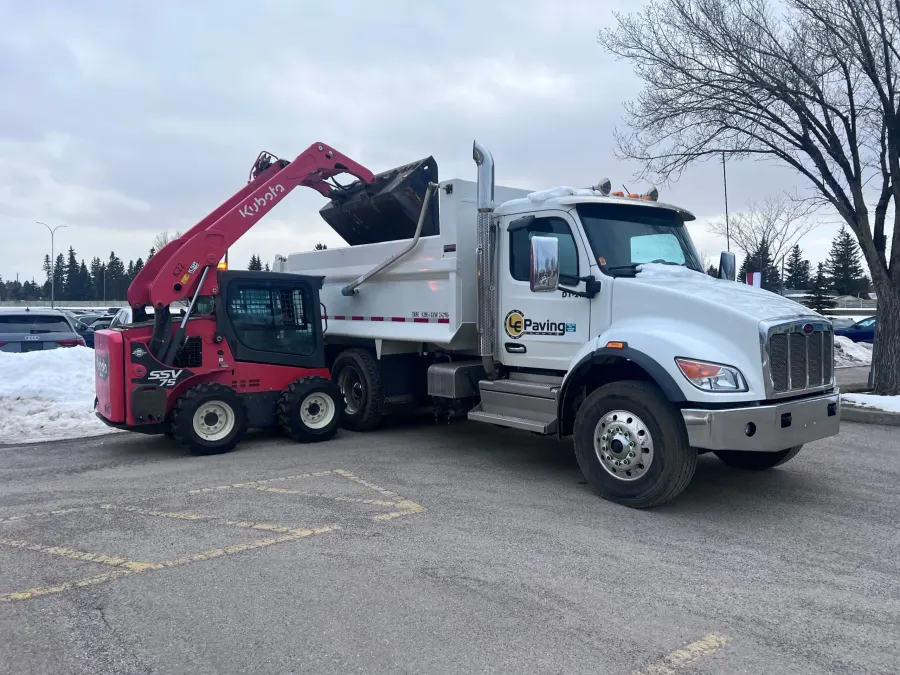
Grass, sod, leaves and branches are composted into rich organic material, blended with our screened loam and used in garden beds and sod installs for better growth and plant health.
All concrete and asphalt we collect is delivered to external concrete and asphalt recyclers.
The dust separated from swept gravel is ideal for compacted, level surfaces like interlocking patios, walkways and gravel road maintenance, at a substantially lower cost than new material.
Together we are making a difference in this city we call home. Not a customer yet? Our sales team can help with your landscape construction and maintenance needs.