If you manage commercial properties, this cycle probably looks familiar. Bids come in, you award the contract, and service starts strong and then slips by mid-season, until the complaints add up and you are left either locked in or searching for a replacement at the worst time of year.
The cause usually is not the contractor, it’s the tender.
When a tender has just enough language to award a bid but not enough to define the work, expectations are left open to interpretation, and the bids you receive become almost impossible to compare on equal footing. The good part is that this is the one piece of the process entirely within your control.
The good news is that a few practical clauses can change this entirely. When expectations are specific and consistent across every bid, every contractor prices for the same clearly defined scope of work. You get a clearer comparison between bidders, better service through the season, and fewer surprises.
Here is what those clauses look like.
Landscape Maintenance Clauses:
- Require a certified safety program. Any contractor working on your property should hold an accredited workplace safety program. This is not a formality. It signals operational maturity and protects you from liability exposure if an incident occurs on site.
- Require digital reporting through a recognized platform. Verbal updates are not accountability. Require your contractor to run their operations through a platform like Aspire, LMN, or Jobber. These systems generate site visit logs, time-stamped records, and service histories that you can reference if a dispute arises. If a contractor cannot demonstrate they use a system like this, that tells you something about how they run their business.
- Require monthly activity logs. At the end of every month, the contractor should submit a written log of what was done at each site. This creates a documented trail and makes it easy to identify gaps before they become grievances.
- Require a walkthrough once per season. Build into the contract a requirement for the contractor to follow up with the property manager and complete a structured portfolio walkthrough at least once each landscape season. This is not a complaint call. It is a scheduled, professional review of standards across your sites. Contractors who are confident in their work will welcome it; those who are not will tend to put it off.
- Require an applicator certificate for fertilization and herbicide work. This is a licensing requirement in most provinces. Make it explicit in your tender. A contractor applying product without the proper certificate is exposing you to regulatory risk, not just doing substandard work.
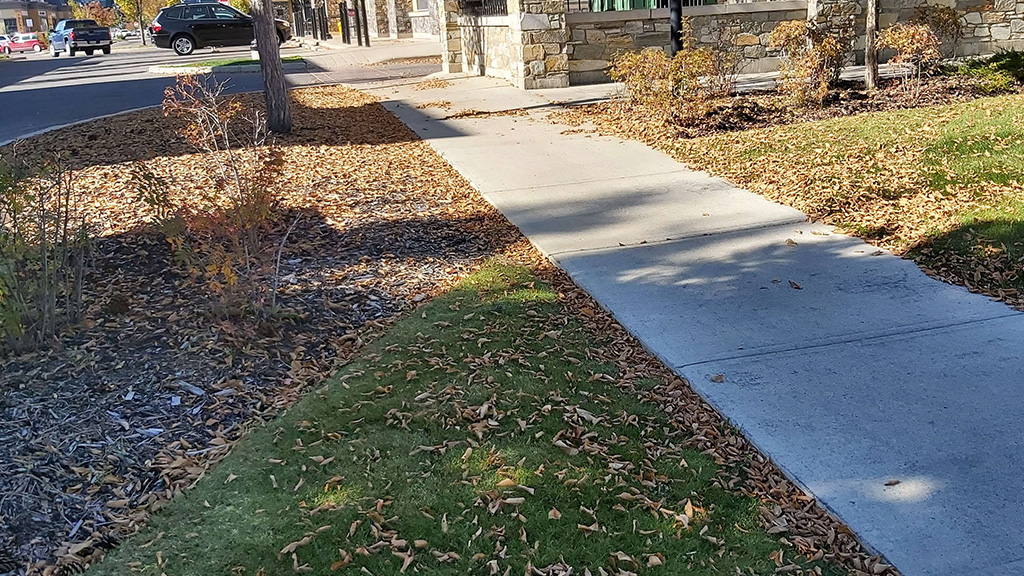
- Require a dead plant count before September 30. This one clause is worth more than most property managers realize. Require your contractor to submit a complete count of dead or failing plant material before September 30 each year, along with a replacement estimate. Timing it before leaf drop matters: while the foliage is still on, dead and struggling plants are far easier to identify accurately. Your contract language should be clear: the count is mandatory every year. Approval of the estimate depends on budget and is not guaranteed. This removes the excuse of not knowing, captures the full growing season, and gives you a documented baseline year over year.
Snow Removal Clauses:
- Require a certified safety program and digital reporting here too. Everything said about landscape maintenance applies equally to snow operations. Require it explicitly in both sections of your tender. Do not assume it carries over.
- Require monthly activity logs. Storm-by-storm documentation matters when a slip-and-fall claim arrives six months after the fact. Monthly logs are your first line of defense.
- Write your snowfall trigger as accumulative, not per-event. If you have a 5cm trigger and you do not specify that it is accumulative, a contractor can argue that three separate 2cm snowfalls do not trigger a plow. Write the language to make clear that accumulation counts toward the threshold. This alone closes a significant number of service gaps, particularly for slush and light-snowfall events.
- Require scraping to manage hard-pack buildup. After a storm cycle, hard pack and compacted snow can build up on driving surfaces and walkways and create real liability. Bare asphalt after every event is not realistic on most budgets, so keep the standard practical: when hard pack accumulates to the point that it needs constant sanding to stay safe, the contractor should scrape it back to bring the buildup under control. Spell this out in the contract so the expectation (when scraping is triggered and what it is meant to achieve) is clear and fair to both you and the contractor.
- Restrict snow piling to approved locations. Snow pushed to the wrong location blocks sight lines, damages landscaping, and creates drainage problems in spring. Designate approved piling locations in the contract. If snow is placed anywhere else, the cost to relocate it is the contractor’s responsibility.
- Hold 10% for curb and landscape damage. Snow equipment damages curbs and landscape edges. Include a 10% holdback clause to cover documented damage. This creates a direct financial incentive for careful equipment operation and gives you a recovery mechanism without having to pursue a separate claim.
The Real Goal: A Level Playing Field
None of these clauses are punitive. They are structural. When every contractor bidding on your portfolio is held to the same documentation, certification, and accountability requirements, the price you receive reflects the actual cost of doing the job properly.
That is what an apples-to-apples comparison looks like. Not the lowest number on the page, but the truest one.
LECM builds these standards into every contract and every season. If you want to talk through how these clauses apply to your specific portfolio, reach out to our team.
Key Takeaways:
- Digital reporting (Aspire, LMN, Jobber) is the baseline for accountability, not a premium ask.
- A dead plant count clause before September 30 is one of the highest-leverage items in any landscape tender.
- Accumulative snowfall trigger language closes a common gap in snow service contracts.
- A 10% damage holdback protects your property and incentivizes care.
- Accountability clauses do not raise good bids. They raise the floor so you see what service actually costs.
Further reading: Are You Getting What You Paid For? How to Use Your Landscape Contract to Protect Service Quality and Property Value